We spend most of our days looking at dumpsites from the air. Our own detection model — a mixture-of-experts (MoE) architecture we built and trained in-house — flags piles across the city, logs coordinates and estimated sizes, and drops them into a portal as a tidy list. It can start to feel abstract, like it's all polygons and plot points.
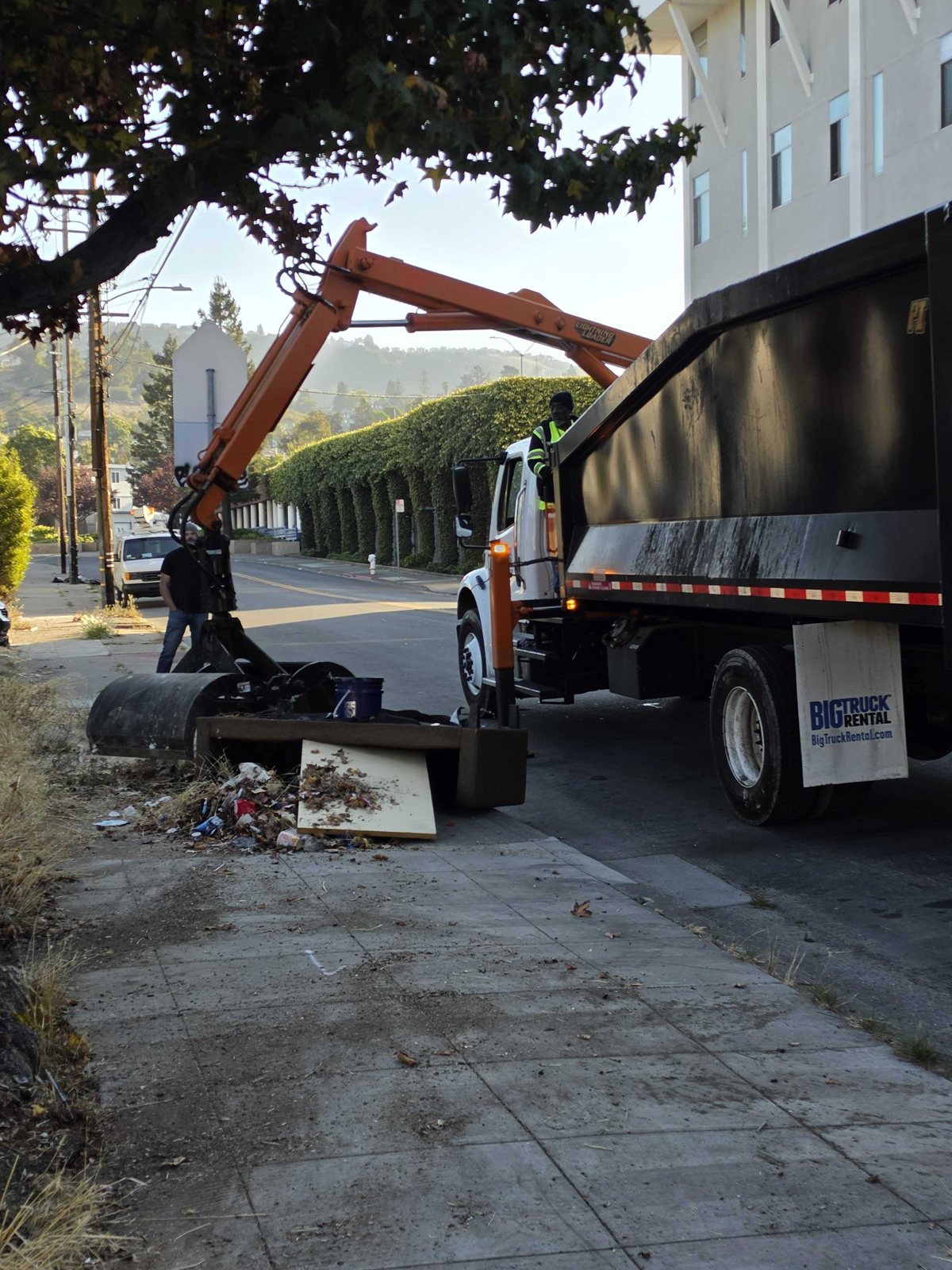
The morning of Thursday, September 24, we traded the drone for the passenger seat and rode along with an Oakland Public Works / Keep Oakland Clean & Beautiful (KOCB) crew working a single illegal-dumping route across the city. Roll-out was just after 8 a.m. By 10, we'd watched grapple booms, rakes, and a lot of gloved hands clear pile after pile off the curb — and we learned as much from the people in the vests as we did from the piles themselves.
The Numbers
Ounce for ounce, the data the crew works from is denser than the job looks. A single survey window — four survey days across two weeks — produced hundreds of concrete, triageable detections, not vague complaints about "some trash on a street." Here's the shape of it:
What's in the piles? Of the significant detections, 130 were tagged as large piles, 47 as furniture commonly dumped together, 42 sat near known encampments, 32 were mixed cardboard, 32 bagged trash, 13 mattresses, 13 appliances, 9 hazardous material with potential safety or hazmat risk, and 191 had significant loose debris. That's the "what" of illegal dumping in a working city — and it matches, street for street, what we saw loaded into the truck that morning.
The Work
The first thing you notice riding along is how physical it is. The lightning loader makes the headlines — snatching a whole mattress set off the curb in one grab and mechanically squashing it into the box. But the majority of the route is rakes, shovels, and hands: cardboard flattened and tied, loose debris swept and bagged, furniture broken down until it fits in the truck.
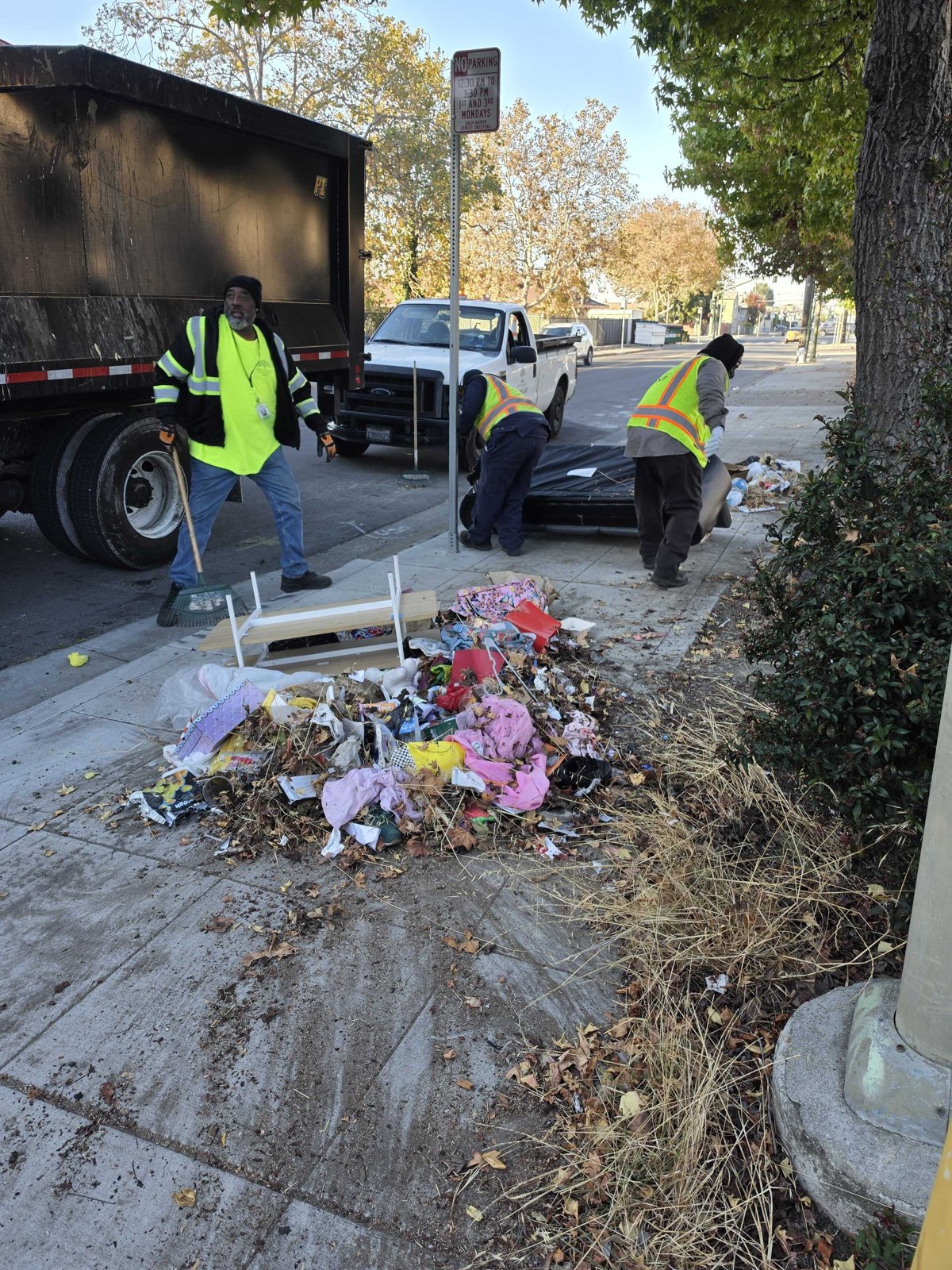
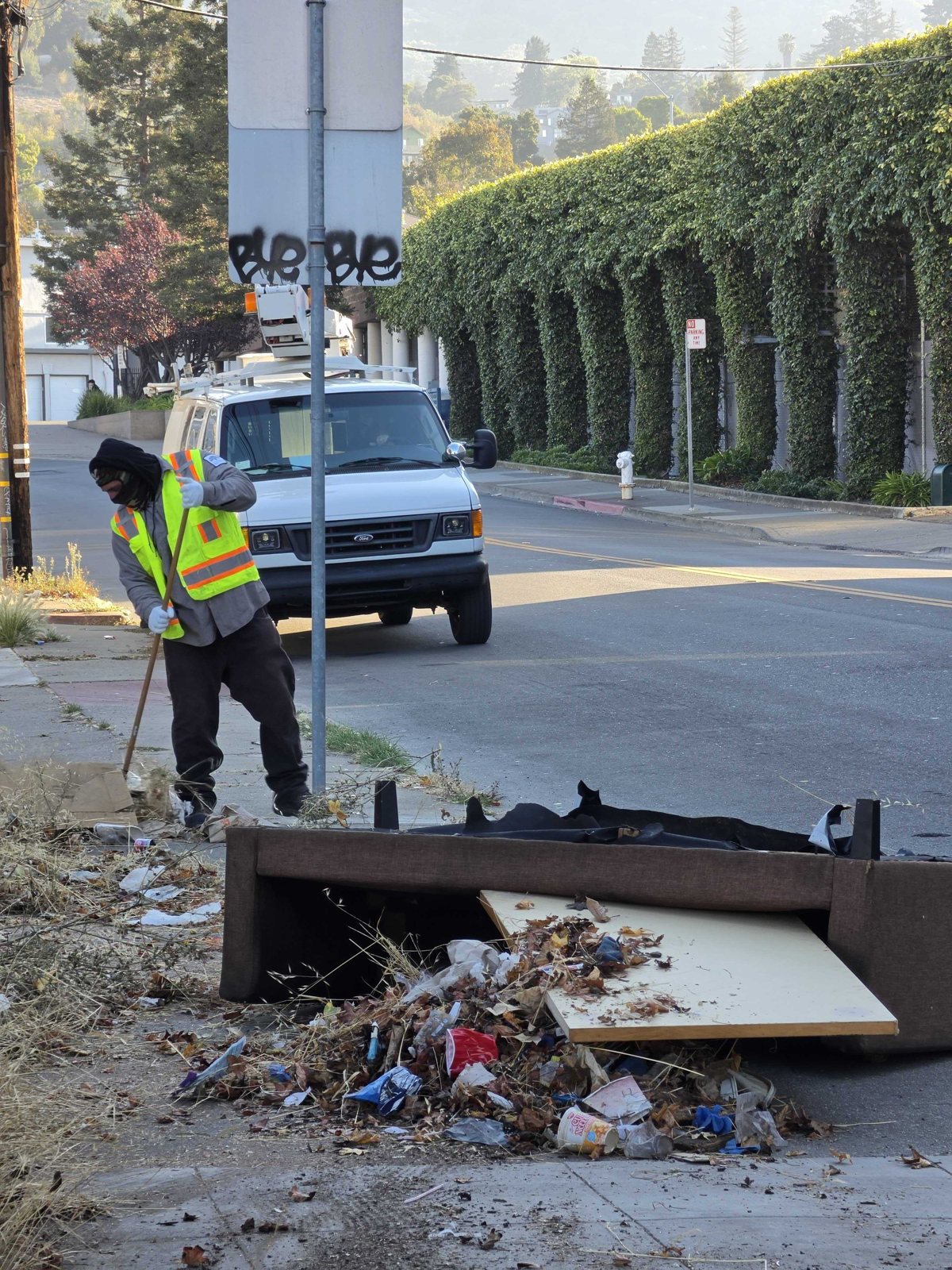
And once — just once — a woman carrying a young child walked straight past the pile we'd flagged from the air. She wasn't a data point. She lives on that block. It was the reminder we didn't know we needed.
Lessons from the Line
We joined the route to see our work handled on the ground, and we left with a much clearer sense of the operating reality that decides whether our data is actually usable. A few things stood out that no dashboard could ever capture:
Some piles sit where people live. What reads as debris from above can be someone's own belongings, and the crew is careful about that: when the material is claimed, it's left where it is. This isn't a simple yes/no — it's a judgment that weighs a clean street against a person's right to their things.
The crew's assignment is the sidewalk and curb. Private property is normally off-limits, and the rare exception is decided at the city level, not by the crew in the field. But the line isn't always crisp — a pile can span both the sidewalk and the property line, blurring where public right-of-way ends and private responsibility begins. Our detections have to respect that boundary, and help make the blur visible instead of hiding it.
A few days on the curb is all it takes for a small pile to become a full-blown one — a fresh dumpsite tends to attract new ones next to it. That's why catching a pile early, and rechecking it, matters so much.
A lightning loader takes a large pile off the curb in a single grab, which lets a crew clear more stops per shift. Whether it's a loader or better detection, it all comes back to freeing up the people on the line to do more.
Each lesson quietly shifts how we think about the product. We're accurate from above — now we understand why accuracy on the line matters, why the date a pile was first flagged matters, and why "it's on private property" is a decision a crew can't make alone. The detection is only the start; the judgment stays with the people on the ground.
From a Believer
Twenty-eight years in Public Works is a long time to know exactly which questions to ask before trusting a new way of doing things. So the reaction that mattered most came from KOCB Supervisor Peter, an OPW veteran who looked straight at the evidence — the data, the maps, and the aerial pictures of garbage from his own districts — and told us plainly, paraphrased with his permission:
"This is game changing. I had real questions — I wasn't sure this would work. But looking at the portal, the maps, and the pictures of the garbage from the air, I'm a believer: this tech is the way we should be doing this." — Peter, KOCB Supervisor, 28 years at Oakland Public Works
Peter never set foot on this ride-along. He didn't have to. What convinced him was seeing it the way a supervisor with 28 years of ground truth would: the maps of streets he knows, and the piles of garbage photographed from above — at scale, all at once, in places he'd been cleaning for decades. Seeing it that way is what made the power of Aerbits plain. A belief earned from the evidence, not assumed, is validation that doesn't show up on a dashboard.
Why We Ride Along
The crews behind Keep Oakland Clean & Beautiful are the ones who actually make the city cleaner. Our part is narrower: find the piles earlier, track them precisely, and hand over a list that stands up to a supervisor's scrutiny. A 13-stop sheet at 8 a.m. is the end of our pipeline and the start of theirs.
The learnings are mutual. The crew told us, unprompted, that they're more than willing to help. So we'll keep riding along — not just to validate against ground truth, but to make sure we're solving the right problem. In the end, the tech only matters if it makes the person-to-person work lighter.